
Mitsubishi Outlander Sport: A Practical Buyer’s Guide
The Mitsubishi Outlander Sport is a subcompact crossover best suited to budget-focused buyers who want standard all-wheel drive, simple controls, and a low entry price, not strong performance or cutting-edge tech. The 2025 model is rated at up to 26 mpg combined and has approximately 21.7 cubic feet of cargo space, a practical starting point for commuters and small households (2025 Outlander Sport specifications and owner feedback).
Maybe you’re shopping from Long Island or the New York City area, where a vehicle needs to handle weekday traffic, tight parking, school runs, and changeable weather without stretching the budget. The Outlander Sport makes its case through everyday simplicity. It’s compact and easy to park, and its cabin controls don’t ask you to learn a complicated system before you can adjust the climate.
That doesn’t mean it’s right for everyone. Acceleration is modest, highway noise can intrude, and the interior technology can feel dated. If your priorities are quick merging, a quieter cabin, or the latest infotainment, you should compare other vehicles closely. If you value straightforward daily use and standard AWD, it’s worth a serious look.
This guide focuses on the buying questions: how the trims and engines differ, what the vehicle feels like on local roads, how to approach used and certified pre-owned options, and whether financing or leasing fits your plans. You’ll also find practical points about trade-in tools and ongoing service. The advice is dealership-informed, but the recommendation is direct: judge the Outlander Sport by the driving you do, not by a spec sheet alone.
Table of Contents
- Why the Outlander Sport Still Makes Sense in 2026
- Where the Outlander Sport Came From
- Trim Levels and Powertrain Options
- How the 2.0-liter and 2.4-liter Drive Differently
- Real-World Driving Impressions on Long Island Roads
- Certified Pre-Owned and Used Buying Options
- Financing and Leasing the Outlander Sport
- Service, Maintenance, and Long-Term Ownership
Why the Outlander Sport Still Makes Sense in 2026
A weekday commute through Long Island traffic, a tight parking spot, and a quick grocery run are the Outlander Sport’s kind of work. For budget-conscious commuters and small families who value simplicity over flash, this compact crossover offers a manageable footprint, available all-wheel drive, and controls that are easy to use. You can set the temperature, connect your phone, and get moving without wrestling with a complicated interface.
Its strongest argument is the familiar, practical format it offers shoppers watching the purchase price. The 2025 model’s fuel-economy and cargo figures, noted earlier, provide a useful baseline for everyday errands, but they cannot tell you how the vehicle will feel on your commute. Expect modest acceleration and a cabin that may feel less polished than newer alternatives. Buyers who want brisk merging, less highway noise, or newer infotainment should compare other vehicles before deciding.
Match the vehicle to your routine
The Outlander Sport suits drivers who usually travel alone or with one passenger, park in busy areas, and carry groceries or everyday bags. Small families should check rear-seat comfort and cargo fit in person, particularly if they use a stroller or bulky child-seat setup. Bring your own equipment to the dealership. A walkaround alone won’t show how well it fits.
Straight advice: Take a test drive on the roads you use. Pay attention to merging, cabin noise, and whether your usual cargo fits without a struggle.
Focus on your daily needs, not just engine output or screen size. Consider how often you drive on the highway, whether you climb hills with passengers, and which controls you use most. If its practical layout, easy-to-use cabin, and available AWD match your routine, keep it on your shortlist. If you need stronger acceleration, a quieter ride, or more modern technology, look elsewhere.
Where the Outlander Sport Came From
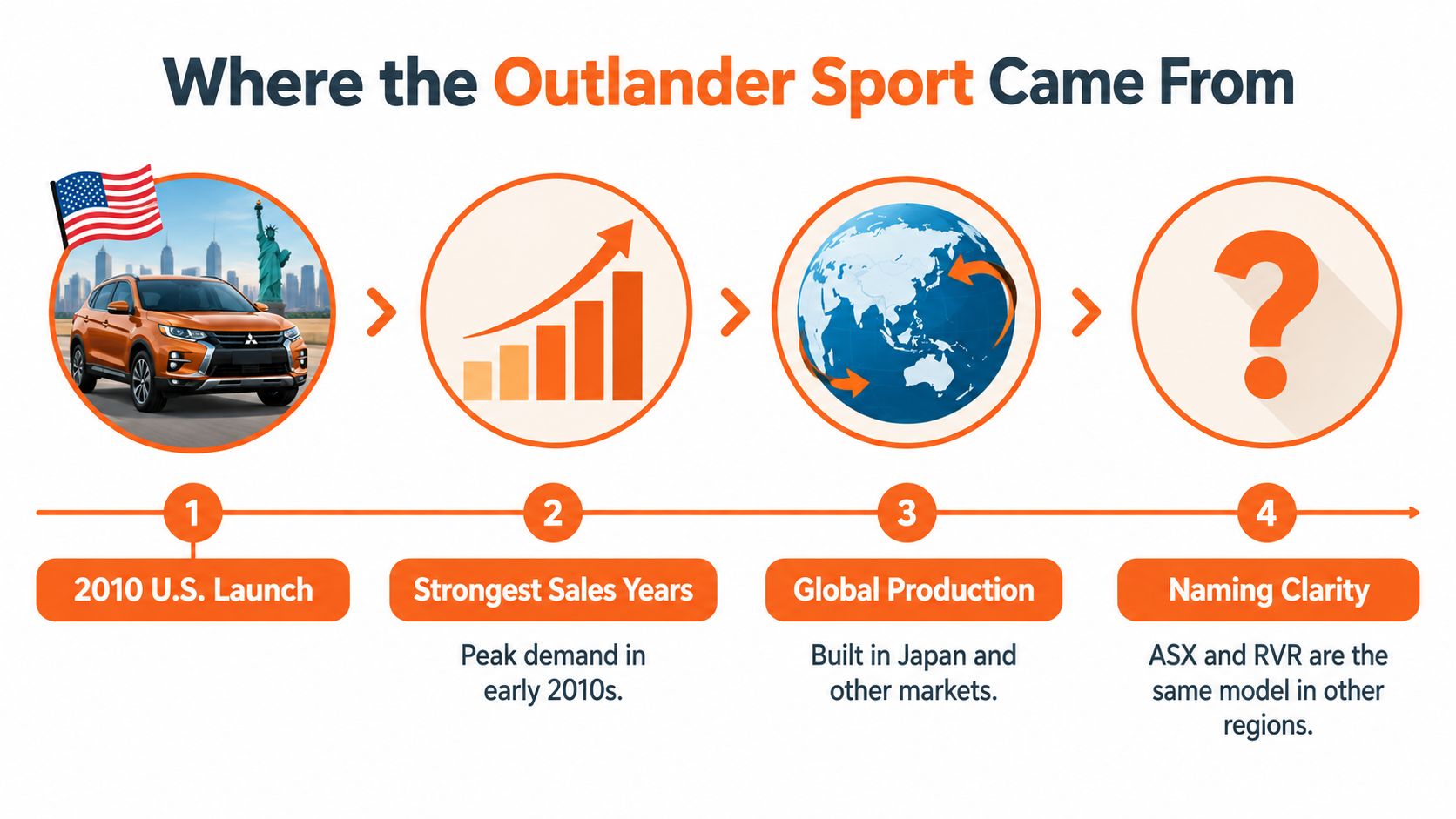
For Long Island commuters watching their budget, the Outlander Sport’s history shows why it remains a familiar used-car option. It entered the U.S. small-crossover market in late 2010, selling 1,690 units in its partial launch year and 16,443 in 2011. Sales peaked in the reported series at 36,966 vehicles in 2015, then held at 36,867 in 2018 (U.S. Outlander Sport, RVR, and ASX sales history). The small gap between those later figures points to steady demand over several years, a useful sign for shoppers looking for a familiar model with an established presence.
One model line, several names
In the United States, Mitsubishi sells this vehicle as the Outlander Sport. The same model line is called the RVR in Japan and Canada and the ASX in many international markets. That matters when you search used listings or look up vehicle information: an RVR or ASX reference may concern the same global model family, not a separate vehicle.
Production expanded at Mitsubishi’s Illinois facility between 2012 and 2015 to serve North America and certain export markets. Production for other markets continued in Japan and China. These naming and production details come from the sales history source cited above.
For a used Outlander Sport, focus on the specific vehicle’s year, condition, equipment, and records. The name alone won’t tell you what you’re buying. This straightforward, long-running model suits shoppers who value a familiar small crossover over flash, especially commuters and small families weighing practical used options.
Trim Levels and Powertrain Options
On a Long Island commute, the right Outlander Sport is the one that covers your daily route without making you pay for features you rarely use. The lineup includes ES, LE, SE, and SEL trims. Most use a 2.0-liter naturally aspirated four-cylinder, while the SEL gets a 2.4-liter. Both engines work with a continuously variable transmission, and standard all-wheel drive is part of the 2024 lineup. EPA figures below are for 2024 Outlander Sport configurations, not the similarly named Outlander. Check the rating and equipment for the exact model year you’re shopping (2024 Outlander Sport EPA fuel-economy ratings).
The 2.0-liter makes 148 horsepower and 145 lb-ft of torque. The SEL’s 2.4-liter delivers 168 horsepower and 167 lb-ft. That extra output helps when merging onto a busy highway, climbing a hill, or carrying passengers and cargo. Its fuel-economy ratings are close: the 2.0-liter AWD is rated at 23 mpg city and 29 mpg highway, while the 2.4-liter AWD is rated at 23 mpg city and 28 mpg highway.
Choose equipment for the drive you do
Skip the assumption that the top trim is automatically the best buy. Choose the features you’ll use, then decide whether the SEL’s stronger engine fits your routes. For flatter commutes and mostly solo driving, the 2.0-liter is the practical choice. If your regular drive involves crowded highway entrances, hills, or a full cabin, test the 2.4-liter before settling on a trim.
| Specification | 2.0-liter AWD | 2.4-liter AWD |
|---|---|---|
| Engine | 2.0-liter four-cylinder | 2.4-liter four-cylinder |
| Horsepower | 148 | 168 |
| Torque | 145 lb-ft | 167 lb-ft |
| EPA city rating | 23 mpg | 23 mpg |
| EPA highway rating | 29 mpg | 28 mpg |
Both engines use a continuously variable transmission, so your main decision is how much power reserve you want, not which gearbox to choose. Standard AWD in the 2024 lineup gives buyers that traction setup without having to select an AWD add-on configuration. Trim equipment can differ by model year, so confirm the features on the specific vehicle before you buy.
How the 2.0-liter and 2.4-liter Drive Differently
For budget-conscious Long Island commuters who value simplicity over flash, the 2.0-liter is the sensible starting point. It handles routine local driving without fuss, but acceleration feels modest when you need to join fast traffic. Add passengers or cargo, or point the road uphill, and you’ll notice that the engine has less reserve.
The SEL’s 2.4-liter adds 20 horsepower and 22 lb-ft of torque over the 2.0-liter, according to the 2024 Mitsubishi Outlander powertrain specifications. On the road, that difference gives you more breathing room when accelerating onto a highway, carrying a full cabin, or climbing a hill. It still isn’t a performance engine. It feels less strained when a normal drive asks for more.
Choose by route, not badge: Stick with the 2.0-liter if you mostly drive alone on flatter roads. Choose the SEL if your regular routes involve crowded highway entrances, hills, or a cabin full of passengers. Test both before deciding.
The small fuel-economy trade-off
As the table above shows, the larger engine’s trade-off is one fewer highway mile per gallon in the listed ratings. For a high-mileage commuter, that difference belongs in the decision, but it doesn’t make the 2.0-liter the right choice for everyone. If you regularly need stronger acceleration, the SEL’s added power may be worth that modest trade-off.
Make your test drive count. Try an on-ramp, a hill if one is nearby, and a stretch where you can listen to the cabin at road speed. Pay attention to whether the 2.0-liter responds well enough for the gaps you face on your usual routes. If it does, there’s little reason to choose more power. If you’re left waiting for a safe opening, the SEL is the better fit.
Real-World Driving Impressions on Long Island Roads
School drop-offs, tight parking lots, and a commute split between local roads and highway traffic show what the Outlander Sport does well. Its compact footprint makes parking easier, and the cabin’s physical controls are simple to find. Owner feedback often praises comfort and fuel economy, while also noting modest acceleration, road noise, and older interior technology.
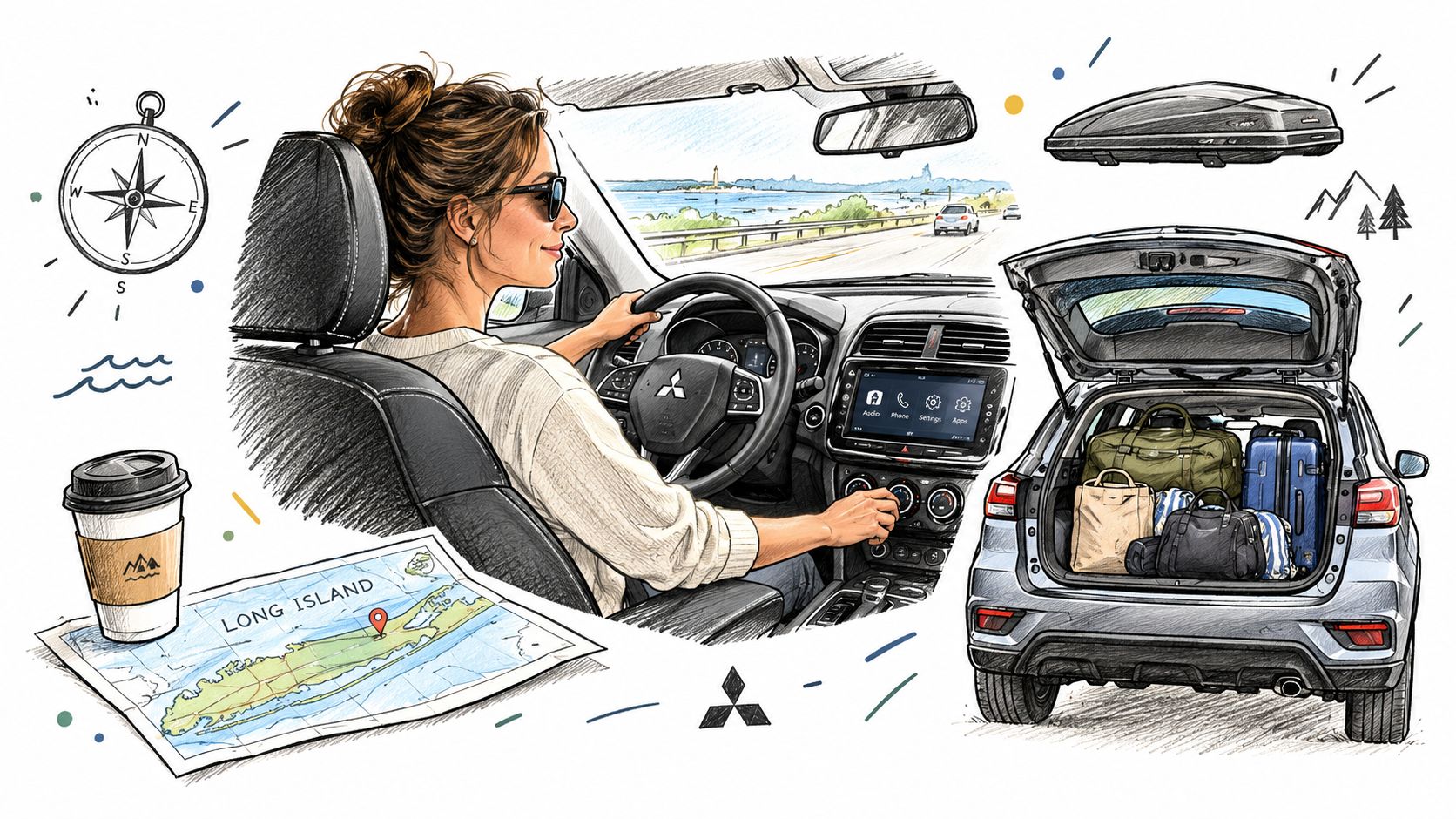
For groceries or a stroller, pay attention to the cargo area’s flat load floor. It matters more when sliding in a stroller or a full grocery haul after a Long Island commute than a headline capacity figure. Bring the bulky items you regularly carry and check how easily they fit.
Where the trade-offs show up
A short school run or trip to the store may never leave you wanting more power. A highway merge with passengers aboard is a better test of the acceleration. Cabin noise also becomes easier to judge on a longer drive than on a quick dealership loop. Take the route you drive, including a busy stretch of highway.
The technology comes down to what you expect from a cabin. Drivers who want the newest interface may find the setup dated; those who prefer clear, physical controls may appreciate its simplicity. For budget-conscious commuters and small families, that straightforward approach can be a better fit than extra flash, as long as a quieter, stronger ride is not a priority.
Drive beyond the dealership. Listen to the cabin on a longer stretch, and check how the seating feels once you have been on the road for a while. The video below gives you another view of the Outlander Sport, but time behind the wheel is the best way to judge its acceleration, noise, and comfort.
Certified Pre-Owned and Used Buying Options
A used Outlander Sport can make sense for buyers focused on affordability, especially if a new vehicle’s payment doesn’t fit the budget. Its established history and past sales presence mean shoppers may encounter examples across different years and configurations, but availability is local and changes over time. Don’t assume every listing is certified or that every trim is easy to find.
Start by narrowing your search to the body type, model year, and price range you can live with. Then compare the vehicle’s condition, service records, features, and ownership history. If a specific trim or color matters to you, ask a dealer about a vehicle-finding service rather than settling for a poor match. Online inventory filters can save time, but they don’t replace inspecting the vehicle and checking its documents.
What to check before you buy
Certified pre-owned listings can include added inspection and coverage benefits, but the details depend on the vehicle and the program terms. Read the actual coverage documents and ask what inspection was completed, what components are covered, and whether roadside assistance applies. A certification label alone shouldn’t end your questions.
- Inspect the service history: Look for consistent maintenance records and ask about any gaps.
- Check the condition yourself: Examine the tires, interior wear, and visible body condition, then arrange an independent inspection if you want another assessment.
- Confirm what certification covers: Get the inspection and warranty terms in writing before you commit.
- Compare the total cost: Review fees, financing terms, and any coverage or add-ons, not only the advertised price.
South Shore Mitsubishi provides online inventory filters and a Vehicle Finder Service for shoppers seeking particular vehicles or features. That can help if you’re comparing used options across a broad budget, including listings priced under $20,000, but the right decision still depends on the specific vehicle and its documented condition.
Financing and Leasing the Outlander Sport
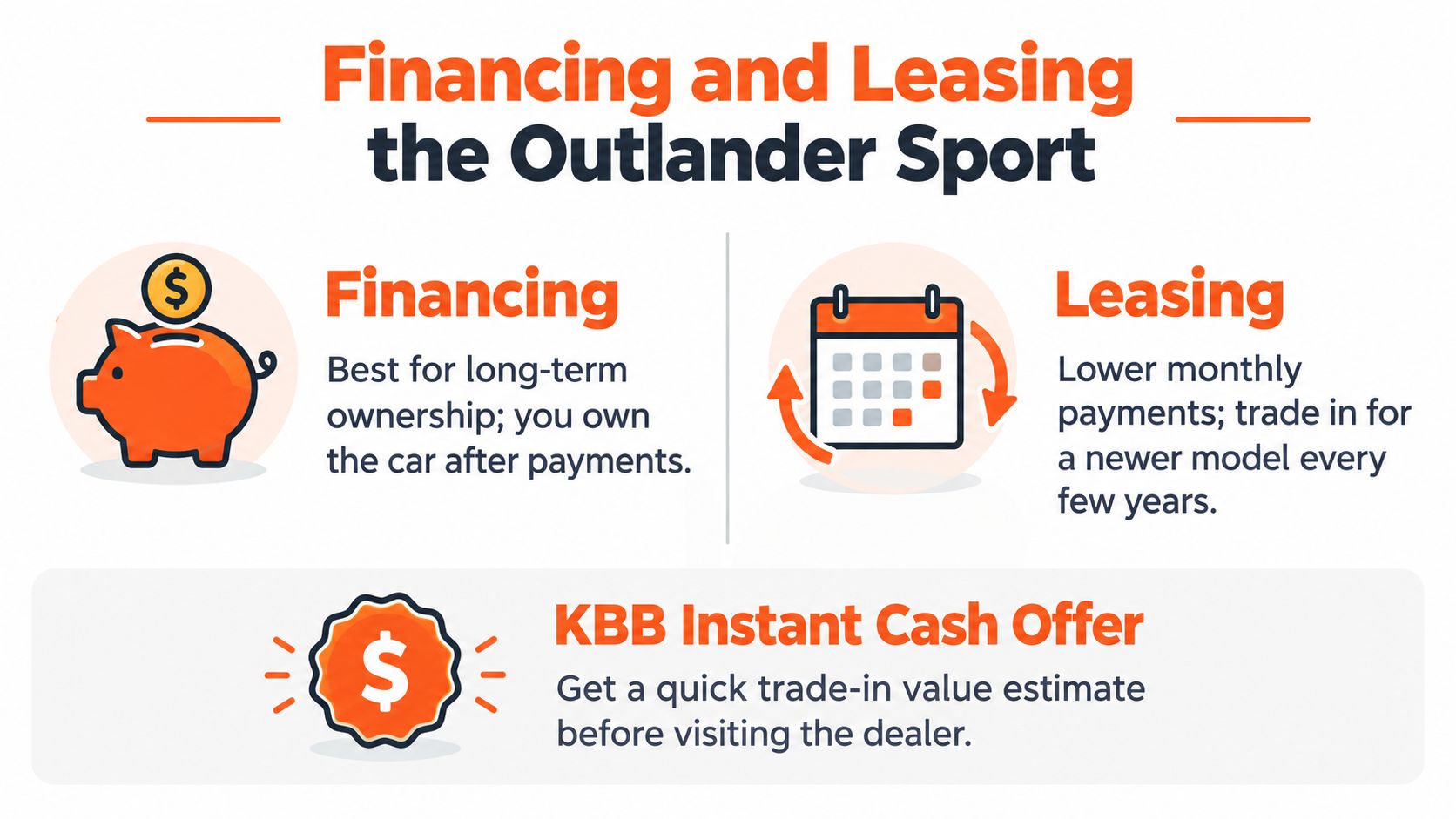
Choose financing if you expect to keep the vehicle and want to own it after making the agreed payments. Leasing may suit drivers who prefer a newer vehicle and are comfortable returning or replacing it under the lease terms. Neither option is automatically cheaper for every shopper. Compare the total cost, not just the monthly payment.
A trade-in can help shape either decision. KBB Instant Cash Offer and a dealership’s Value Your Trade tool can provide an early estimate, giving you a starting point before you visit. Treat an online figure as an estimate to review, not a final promise. Vehicle condition and the appraisal process can affect the offer.
Make the payment fit your driving
Before signing a lease, check the mileage allowance and what happens if you exceed it. Before financing, look beyond the monthly amount and consider the total you’ll pay over the term, along with maintenance and insurance costs. A longer term can lower the monthly payment while keeping you in debt longer, so make sure the arrangement still fits your plans if your needs change.
An online credit application can help you begin the financing process. Capital One pre-qualification is offered as a way to review likely rates without impacting your credit score; confirm the current terms and understand that pre-qualification isn’t the same as a final loan approval. If you’re unsure, ask the finance team to lay out the terms in plain language before you choose.
The Outlander Sport is best suited to buyers who value standard AWD, manageable size, and easy-to-use controls more than fast acceleration or the latest cabin technology. Drivers who regularly carry heavy loads, want stronger performance, or expect a highly modern infotainment experience should compare alternatives before committing. A fair test drive and clear financing numbers will tell you more than the lowest advertised payment.
Service, Maintenance, and Long-Term Ownership
The ownership decision doesn’t stop when you sign the paperwork. Regular maintenance, suitable tires, and timely repairs all matter, especially when the vehicle is part of a busy commute. Keep the service schedule for your specific model year and follow the maintenance requirements in its owner’s manual. If you buy used, ask for service records and clarify what work is due next.
For routine work or repairs, a Mitsubishi service center can provide service through factory-certified technicians. An OEM parts department can help you source manufacturer parts, while a tire store can discuss options for local seasonal conditions. Online service scheduling is useful when you want to plan an appointment around work or family commitments. Check what services are available and whether the appointment includes the repair or maintenance your vehicle needs.
Keep the decision practical
Roadside assistance can be useful if your vehicle becomes disabled, but check the coverage terms and eligibility rather than assuming every used vehicle includes it. Ask what support is available for the particular vehicle you own or plan to buy. It’s also sensible to keep maintenance records and address warning lights or unusual changes in how the vehicle drives promptly.
My recommendation is straightforward: choose the Outlander Sport if you’re a budget-conscious commuter or small-family buyer who wants standard AWD, a compact footprint, and controls that are easy to use. Skip it if your regular routine includes heavy loads, frequent hill climbs with a full cabin, or a strong preference for lively acceleration and newer infotainment. The 2.0-liter suits routine driving; test the SEL’s 2.4-liter if extra power matters more than its slightly lower highway fuel-economy rating.
South Shore Mitsubishi offers new and pre-owned vehicles, financing and leasing assistance, trade-in appraisal tools, and factory-certified service and parts in Freeport. If the Outlander Sport fits your needs, visit South Shore Mitsubishi to compare available vehicles and arrange a test drive.
0 comment(s) so far on Mitsubishi Outlander Sport: A Practical Buyer’s Guide