
Outlander PHEV MPG Explained and How to Maximize It
The Mitsubishi Outlander PHEV is rated at 64 MPGe combined when you’re driving with battery support and 26 MPG combined once the battery is depleted, with 25 city and 27 highway in gas mode. Your real Outlander PHEV mpg depends heavily on one habit above all others: how often you plug it in.
If you’re shopping from Long Island, that split probably feels confusing at first. You might drive a short weekday commute, a few school or grocery runs, and then take a longer weekend highway trip. On paper, the same SUV can look extremely efficient one day and much more ordinary the next.
That’s not a mistake in the label. It’s how plug-in hybrids work.
The Outlander PHEV is really two driving experiences in one vehicle. When you start with charge in the battery, it can behave like an electric-first commuter. When that battery energy is used up, it behaves more like a gasoline hybrid SUV. If you mix those two situations together without separating them, the mpg numbers stop making sense.
The most useful way to shop a plug-in hybrid is to treat it as charged driving and battery-depleted driving, not as one single mpg figure.
A lot of shoppers want one clean answer. What they really need is a practical answer. How will this vehicle fit the way they drive?
Table of Contents
- Introduction to Outlander PHEV MPG and Why It Confuses Shoppers
- How MPGe and MPG Work for Plug-In Hybrids
- Official Outlander PHEV MPG and MPGe Ratings Explained
- Real World Electric Range vs MPG in Everyday Driving
- How Charging Habits and Driving Conditions Change Your MPG
- Practical Tips to Maximize Outlander PHEV Efficiency
- Choosing the Outlander PHEV for Your Driving Needs
Introduction to Outlander PHEV MPG and Why It Confuses Shoppers
A common Long Island shopping moment happens after two test drives and one glance at the window sticker. One shopper is thinking about a short weekday commute, school pickup, and charging at home most nights. Another is picturing weekend highway runs to Suffolk or upstate, with little or no plugging in between. Both are looking at the same Outlander PHEV, but they should not expect the same fuel economy story.
That is the part many comparison tools flatten into one headline number.
The easiest mistake to avoid is treating the best-case number as your all-the-time number. The second mistake is going too far the other way and judging the SUV only by its gas-only result, even if you plan to charge regularly. Both errors miss how a plug-in hybrid fits into a week of driving.
One SUV, two everyday outcomes
The Outlander PHEV works like an SUV with two efficiency phases. First, there is the charged part of your routine, where battery support does a lot of the work. Later, there is the battery-depleted part, where the vehicle behaves much more like a gas-powered hybrid SUV.
That split matters more than shoppers expect because ownership cost follows the same pattern. A driver who plugs in often may buy fewer gallons but use more home electricity. A driver who rarely plugs in will lean more on gasoline and see a very different monthly math problem.
So the useful shopping question is not just, “What mpg does it get?”
It is closer to this:
- How many of my weekly miles start with a charged battery
- How many miles happen after that charge is used
- Am I comparing my best days, my average week, or a long-trip weekend
Why shoppers get tripped up
Online listings usually spotlight the highest-looking efficiency figure. That is understandable, but it pushes many shoppers into mixing charging-supported driving with battery-depleted driving as if they were the same thing.
They are not the same ownership experience.
If your routine includes frequent charging and lots of shorter local trips, the Outlander PHEV can feel much more efficient than a regular gas SUV. If your routine is mostly long highway stretches with little charging, the gas-mode number will shape your experience much more. The label is not broken. The reading habit often is.
Plain-English rule: Shop the Outlander PHEV in two buckets. Charged driving and battery-depleted driving.
That approach gives you a clearer answer than one blended headline ever will. It also sets up the cost question many articles skip: whether your own charging habits put you closer to a best-case scenario or a more average one.
How MPGe and MPG Work for Plug-In Hybrids
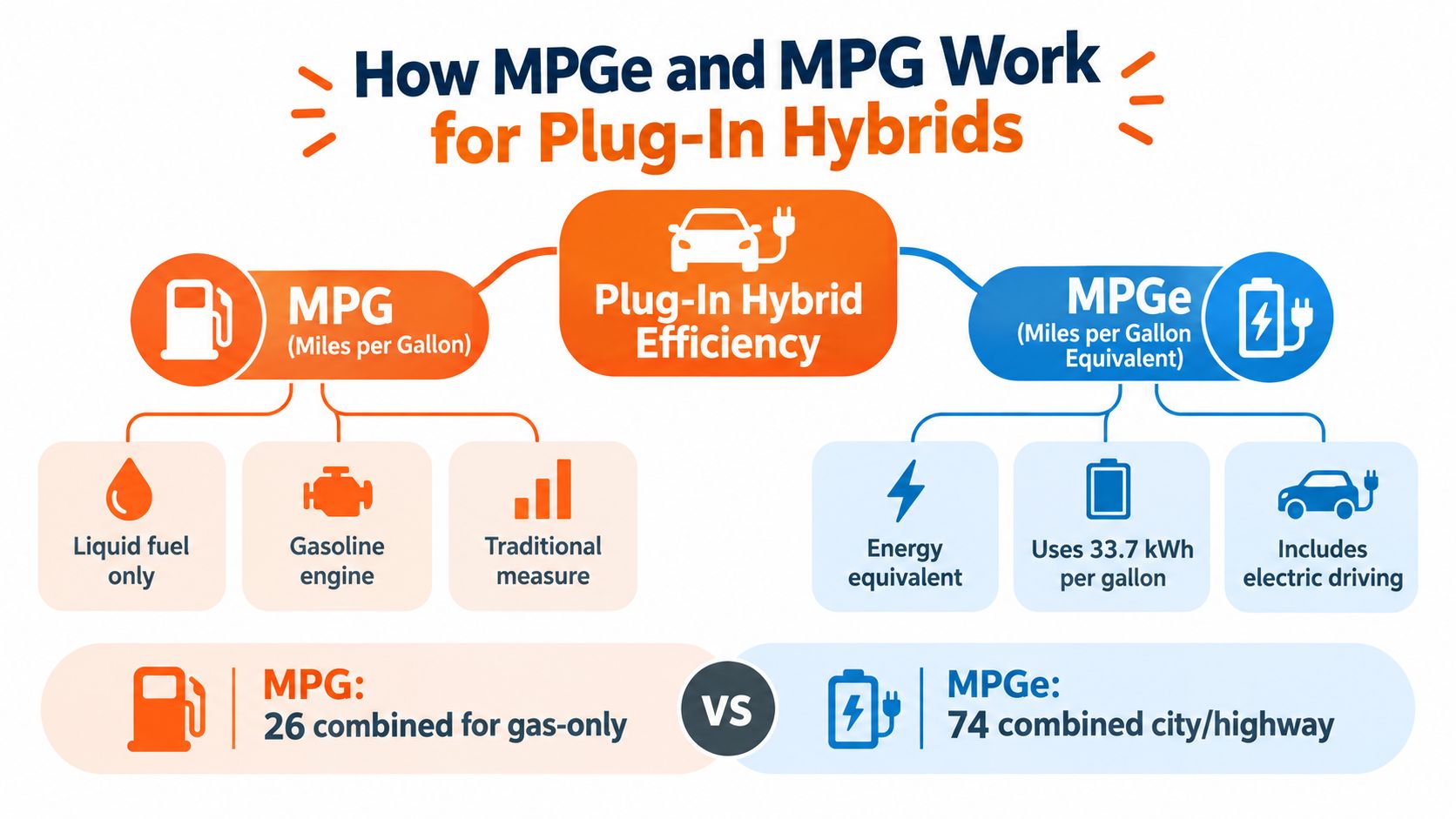
MPG and MPGe look similar, but they answer two different questions.
MPG tells you about gasoline consumption. MPGe is an energy-equivalent measure that includes electric driving. Think of them as two currencies. Gasoline is one currency. Electricity is another. MPGe is the EPA’s way of converting both into one comparable yardstick for plug-in vehicles.
MPG is the gas-only question
When you read MPG on a plug-in hybrid, you should think: how efficient is this SUV once it’s leaning on gasoline?
That number matters more than many shoppers expect. If you take a longer trip, don’t recharge often, or use the vehicle after the battery-supported portion has been used, this is the number that starts to feel more real in daily ownership.
MPGe is the blended energy question
MPGe is useful, but only if you read it correctly. It does not mean the vehicle is burning that many miles’ worth of gasoline per gallon. It means the EPA has combined electric energy use and gasoline use into one standardized comparison metric.
That’s why a plug-in hybrid can show a much higher MPGe number than its gas-only MPG number. Electricity is part of the equation.
Why the EPA shows both
The EPA gives plug-in hybrids multiple efficiency views because one number alone would leave out how the vehicle works. The Outlander PHEV can move through daily life in more than one state.
- Battery-supported driving where electric energy plays a major role.
- Hybrid-style driving after the battery-supported portion is depleted.
- Mixed use where your week includes both of those situations.
That’s also why regenerative braking and low-speed local driving can help a plug-in hybrid more than steady high-speed cruising. In stop-and-go driving, the system has more chances to recover energy and use electric assist. On a long highway stretch, those advantages usually shrink.
Read MPGe as a measure of total energy use. Read MPG as your gasoline fallback.
A lot of confusion disappears once you separate those two ideas. MPGe helps you compare plug-in vehicles on standardized energy use. MPG helps you estimate what happens when the battery advantage isn’t doing as much work.
Official Outlander PHEV MPG and MPGe Ratings Explained
A lot of shoppers reach this point and ask a fair question: which number is the one?
For the current Outlander PHEV, the official U.S. ratings are 64 MPGe combined when electricity is part of the drive, and 26 mpg combined when the SUV is running as a gasoline hybrid, according to Edmunds specs for the 2024 Outlander PHEV. Edmunds also lists 25 mpg city and 27 mpg highway in gas operation.
The easiest way to read that is to separate two ownership modes. One is charge-supported driving, where plugging in regularly lets electricity carry part of the work. The other is battery-depleted driving, where the vehicle behaves much more like a conventional hybrid after the usable charge is gone.
Outlander PHEV EPA efficiency at a glance
| Operating Mode | EPA Rating | What It Means |
|---|---|---|
| Charge-supported combined driving | 64 MPGe combined | A blended efficiency rating that includes electric energy and gasoline |
| Gasoline hybrid driving, including after the battery-supported portion is used | 26 mpg combined | Your gasoline efficiency once the trip depends mainly on the hybrid system |
| Gas-mode city driving | 25 mpg city | A closer match for urban driving after electric support is largely used up |
| Gas-mode highway driving | 27 mpg highway | A closer match for longer steady-speed gasoline driving |
The two most important numbers are 64 MPGe and 26 mpg, but they answer different questions.
64 MPGe is the best-case style number. It fits drivers who charge often and do enough shorter driving for stored electricity to matter. 26 mpg is the fallback number. It is the one to keep in mind for long trips, missed charging days, or weeks when the battery starts most drives partly used.
That is also why some tables show both “gas-only combined” and “battery depleted combined” at 26 mpg. They are usually pointing to the same real-world state: the SUV is no longer getting a meaningful boost from a fresh plug-in charge, so gasoline efficiency becomes the main story.
Why this split matters more than a single headline number
A plug-in hybrid works a bit like having two fuel budgets in one vehicle.
The electric side can make local driving look very efficient. The gasoline side sets the floor for road trips and charge-light ownership. If you blend those together without context, the label becomes harder to use.
That is where shopping math gets clearer. A driver who plugs in every night may spend much of the week closer to the charge-supported side of ownership. A driver who rarely plugs in should focus much more on the 26 mpg combined figure, because that is closer to the average result once the battery advantage fades.
Model-year context matters
Independent model-year history from MPG Buddy’s Outlander PHEV listings shows the newer Outlander PHEV improved both its gasoline efficiency and its electric range versus earlier versions.
That matters because more usable electric range changes the odds. It gives regular chargers more chances to stay in the higher-efficiency, charge-supported part of ownership. It does not erase the gas number. It changes how often you live in it.
Real World Electric Range vs MPG in Everyday Driving
The easiest way to understand real-world Outlander PHEV mpg is to compare a best-case day with an average or battery-depleted day.
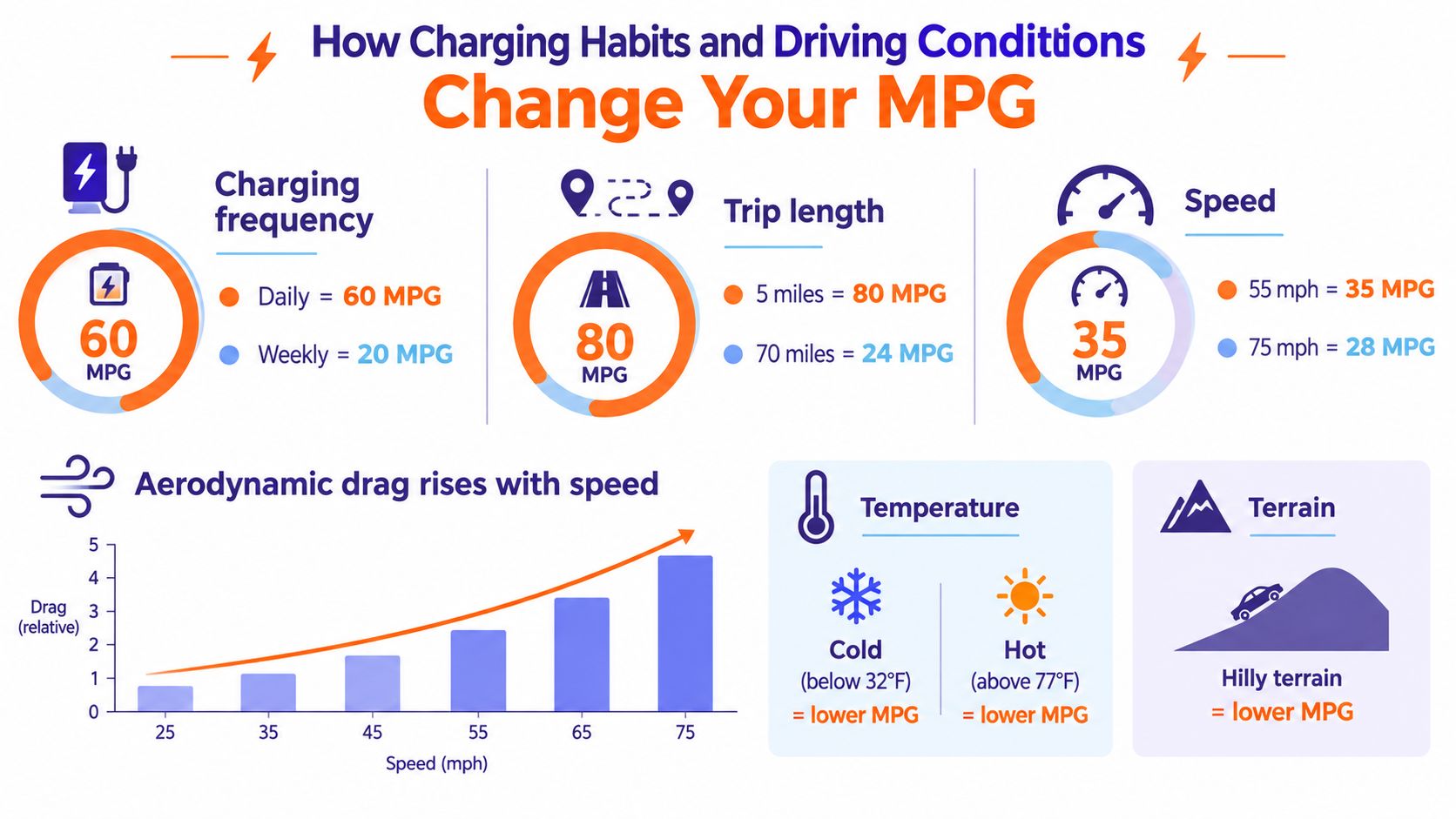
One review example captured this clearly. A 70-mile drive starting with a full battery returned 101 mpg, while the same vehicle delivered 33 mpg in hybrid mode over a similar distance, according to Capital One’s 2026 Outlander Plug-in Hybrid review.
That’s a huge swing, but it shouldn’t be surprising. In the first case, the trip starts with stored electricity helping carry the load. In the second, the vehicle is working much more like a conventional hybrid.
Best case versus average case
Best-case driving for a plug-in hybrid usually looks like this:
- Shorter local trips where battery energy covers a meaningful share of the day
- Frequent charging so the vehicle starts with usable electric energy
- Lower-speed traffic where regenerative braking and electric assist can contribute more
Average-case driving drifts away from that pattern. The longer the drive and the less often you recharge, the more your fuel economy starts to resemble the gasoline side of the vehicle.
Why highway trips flatten the advantage
Independent UK-market testing offers a helpful reality check. Reviews report a WLTP figure of 313 mpg, but also note that this excludes the electricity drawn through the charging cable and overstates real liquid-fuel efficiency. The same testing reports roughly 35 mpg once the battery is depleted, as discussed in Car and Driver’s Outlander hybrid coverage.
That’s why road trips can feel very different from weekday commuting. On the highway, speed rises, aerodynamic drag becomes a bigger factor, and the battery-supported edge has fewer chances to shine.
A quick video can help visualize how this plays out in practice:
A plug-in hybrid often looks strongest when you use it like an electric commuter with gasoline backup, not when you treat it like a gas SUV that occasionally has a plug.
A simple expectation model
If your driving is mostly local and you charge regularly, your ownership experience will tend to feel closer to the charged scenario than the depleted one.
If your driving is mostly long-distance or you rarely plug in, your real-world result will tend to move toward the battery-depleted side. That doesn’t make the vehicle a poor choice. It just changes the math.
How Charging Habits and Driving Conditions Change Your MPG
Leave home Monday morning with a full battery and the Outlander PHEV can feel like two vehicles in one. Leave home Friday with no charge because you forgot to plug in all week, and the math looks very different. That gap is what confuses many shoppers.
The current-generation Mitsubishi Outlander PHEV is rated at 64 MPGe combined in blended electric and gas operation and 26 MPG combined once the battery is depleted, with EPA city and highway gas-mode ratings of 25 and 27 MPG, as explained in this Outlander PHEV mpg-on-petrol review. The key is that these are not competing numbers. They describe different parts of the same ownership experience.
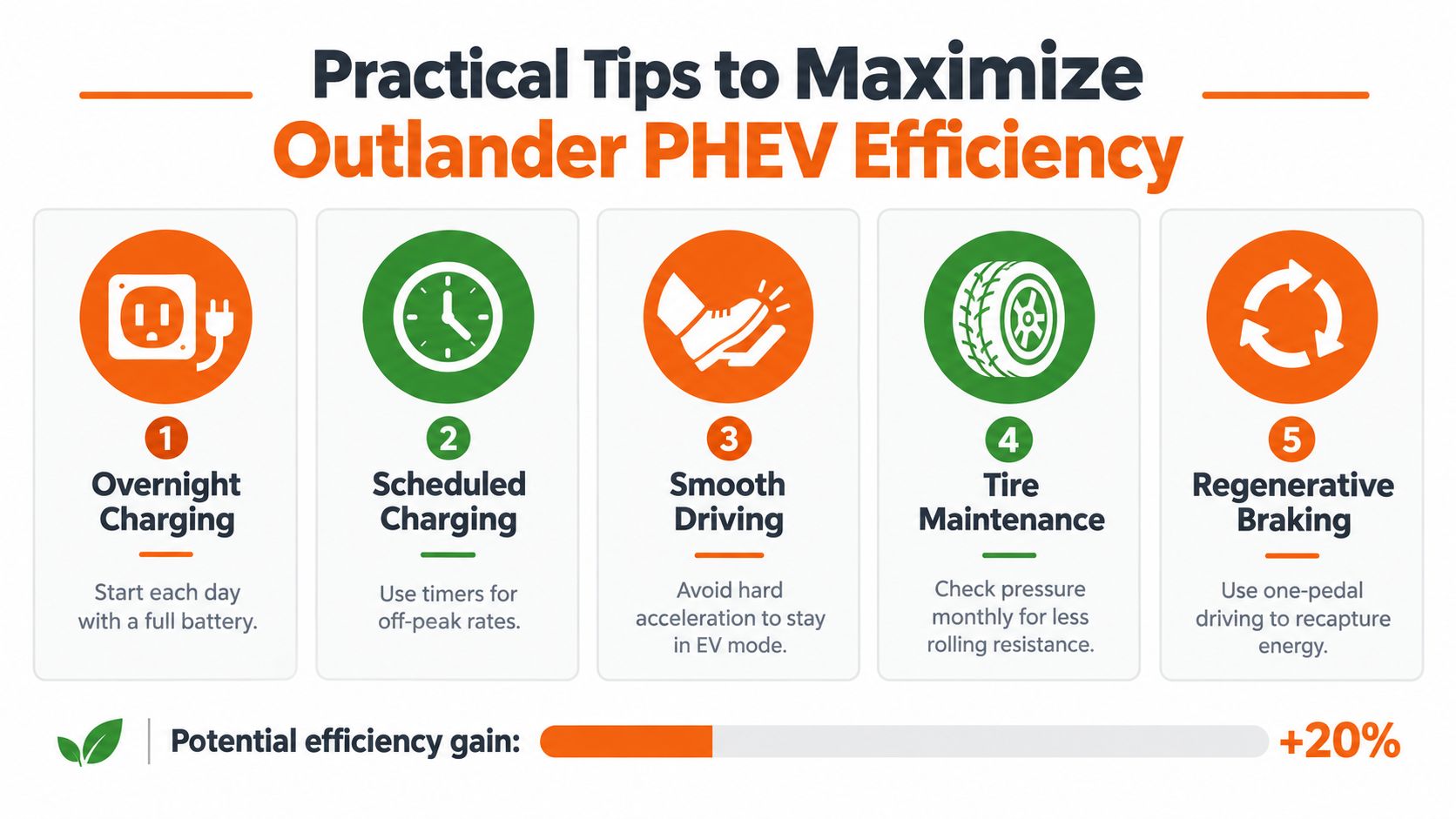
Charging frequency changes the result more than any label
Charging habit is the main lever because it decides how often you start with lower-cost electric miles available.
A simple way to picture it is to split ownership into two buckets. In the first bucket, you charge regularly and many weekday miles happen before the gas engine has much to do. In the second bucket, you rarely plug in, so the SUV spends much more time acting like a conventional hybrid and your fuel economy moves closer to the battery-depleted figure.
That is why two owners can both report honest MPG numbers and still sound far apart.
A weekly cost model makes the difference easier to see
Here is the everyday version of the math. Suppose one driver charges nightly and mainly uses the Outlander PHEV for commuting, school runs, and errands. A second driver has the same routes but only plugs in twice a week. The first driver shifts far more miles into the battery-supported part of driving, so gasoline purchases usually stay lower. The second driver burns through the available electric miles earlier in the week and spends more trips in gas-backed operation.
Best-case scenario, regular overnight charging turns the vehicle into an electric-first commuter with gasoline backup.
Average-case scenario, inconsistent charging creates a mixed pattern where some days feel very efficient and others look much closer to ordinary hybrid fuel use.
This is the angle many MPG comparisons skip. The question is not only how far the vehicle can go on a charge. The bigger ownership question is how often your routine gives it that charge.
Trip type matters because it changes how the week averages out
A plug-in hybrid rewards repeatable local use more than random use.
For example, five short weekday trips with a recharge between days can produce a much stronger weekly result than one long day of back-to-back driving with no chance to plug in. The total miles may be similar. The average will not be. One pattern keeps refilling the electric side of the equation. The other spends it early, then leans harder on gasoline for the rest.
Weather and conditions can shrink the charged advantage
Cold weather, heavy cabin heating, steep climbs, and full loads can all reduce how long the battery-supported portion lasts. That does not mean the vehicle stops being efficient. It means your best-case pattern gets compressed.
So the useful shopping shortcut is simple. Estimate your costs from your real charging cadence. If you can plug in most nights, your ownership experience is more likely to resemble the charging-supported side. If you expect to charge only occasionally, judge the vehicle with the battery-depleted MPG in mind as well.
For local shoppers comparing ownership costs, inventory, trade-in tools, financing resources, and Mitsubishi-certified service, one factual option is South Shore Mitsubishi in Freeport.
Practical Tips to Maximize Outlander PHEV Efficiency
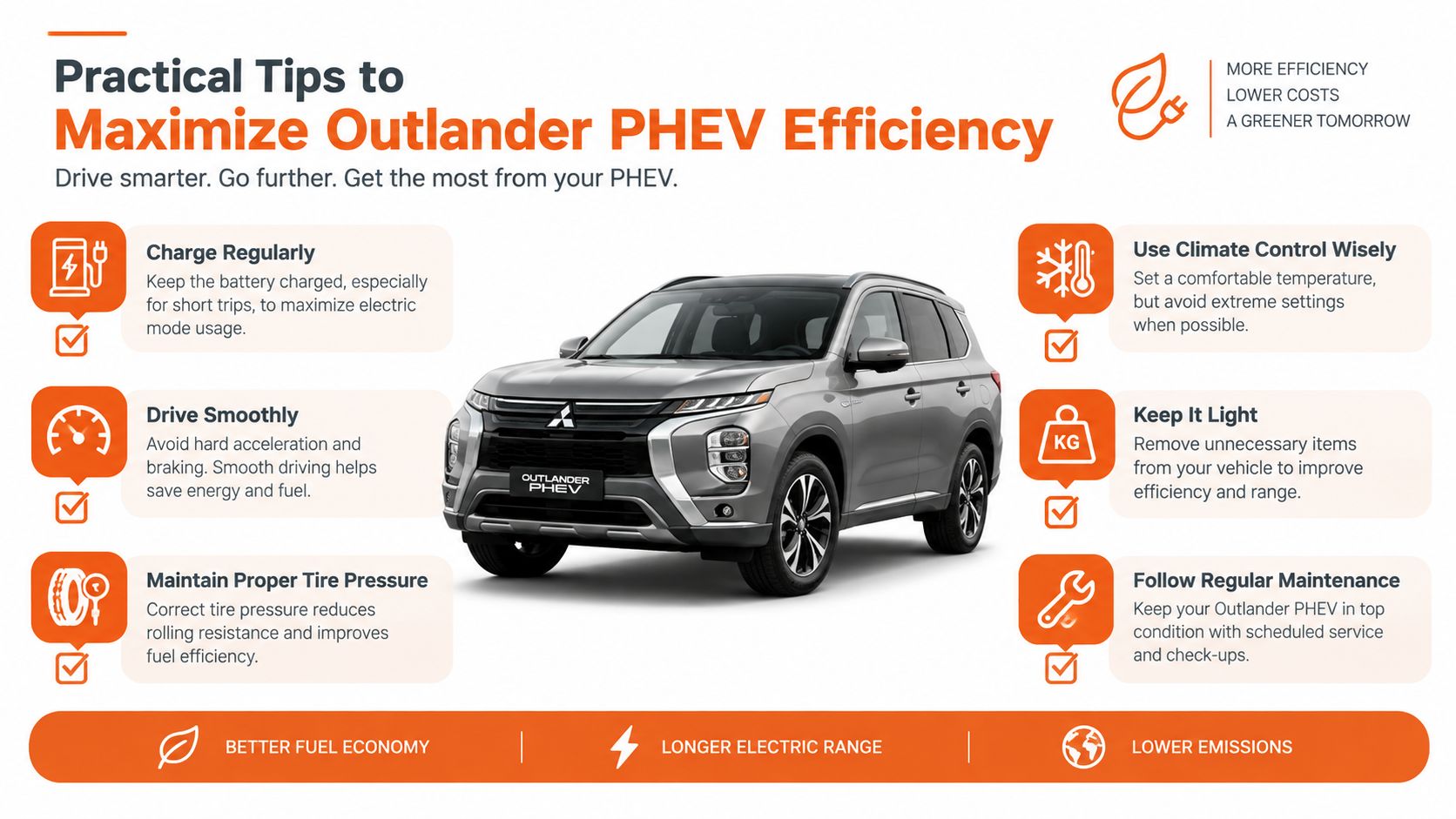
If you want stronger Outlander PHEV mpg in daily life, the goal is simple. Keep as many miles as possible in the battery-supported part of driving.
Build a routine, not a workaround
The easiest way to miss the value of a plug-in hybrid is to treat charging like an occasional bonus instead of part of the routine.
Try habits like these:
- Charge overnight when you can. Starting the day with battery energy gives the SUV the best chance to cover local driving in its stronger efficiency zone.
- Use scheduled charging if it fits your setup. Timers can make charging feel automatic instead of something you have to remember late at night.
- Save local errands for battery-supported driving. Short trips are where plug-in hybrids usually feel most rewarding.
Drive in a way that helps the system help you
You don’t need to drive slowly or unnaturally. Smooth inputs help the vehicle stay in its efficient operating range more often.
A few examples:
- Accelerate progressively. Hard launches can pull the gas engine into the work sooner and more often.
- Brake early and smoothly. Regenerative braking works best when you give the system time to recover energy.
- Keep highway speed realistic. Faster cruising tends to shrink the plug-in advantage.
If your week includes both town driving and one longer highway day, use the battery-supported portion where it matters most. Don’t waste that energy on the least favorable part of the route.
Don’t ignore basic maintenance
Even the smartest hybrid system can’t overcome neglected basics.
- Check tire pressure regularly. Properly inflated tires reduce unnecessary rolling resistance.
- Use drive modes thoughtfully. Eco-oriented settings can help smooth out power delivery.
- Plan charging stops on longer routes if available. That can preserve more of the plug-in benefit over the full day.
For many drivers, the biggest improvement doesn’t come from a special technique. It comes from consistency. Plug in often, use the electric support on short trips, and understand that long gas-heavy highway miles will naturally pull your average down.
Choosing the Outlander PHEV for Your Driving Needs
A simple way to judge the Outlander PHEV is to picture two versions of your week.
In one version, you start many mornings with a charged battery, handle school runs, errands, or a moderate commute, and use gasoline mainly as backup. In the other, you drive long highway stretches and rarely plug in. The same SUV can feel very different in those two routines, which is why plug-in hybrid MPG confuses so many shoppers.
The key is separating charging-supported efficiency from battery-depleted MPG. Charging-supported driving is the best-case side of ownership. Battery-depleted driving is closer to your average if plugging in becomes occasional instead of routine.
This model fits best if your pattern sounds like this:
- You can charge at home, at work, or both
- A good share of your miles are local or mixed driving
- You like the idea of using electricity for daily driving but still want a gas engine for longer trips
It is a weaker match if most of your week is high-speed highway driving and the battery often starts the day partly charged or empty.
Here is the practical math many shoppers skip. The EPA’s fuel economy page for the 2026 Mitsubishi Outlander Plug-in Hybrid 4WD shows separate ratings for electric-assisted operation and gasoline operation. That split matters more than the headline number. If you charge often, your costs can land much closer to the electric side. If you do not, your ownership costs drift toward the gas-only side.
A plug-in hybrid works a bit like a discounted first segment of the trip. Once that lower-cost electric portion is used up, the rest of the drive is paid for at the gasoline rate. So the question is not only “What is the MPG?” It is “How often will I use the cheaper first segment?”
That is why charging habit is part of the purchase decision, not just a convenience detail.
If you want a practical rule, use this one. Frequent charging plus shorter daily miles gives the Outlander PHEV its strongest case. Infrequent charging plus repeated long-distance driving makes it behave more like a conventional SUV with extra weight and less benefit from the plug.
If you want help comparing trims or checking current inventory based on your commute, South Shore Mitsubishi can help with model availability, financing, trade-in, and service questions in a straightforward way.
0 comment(s) so far on Outlander PHEV MPG Explained and How to Maximize It