
Outlander Sport vs Outlander: A Mitsubishi SUV Comparison
You’re standing on a Long Island Mitsubishi lot, looking at two SUVs that appear related enough to create a problem. One is easier on the budget and easier to place in a tight driveway. The other offers more room, more seats, and the kind of flexibility that matters once children, luggage, or weekend passengers become part of your routine.
The right answer in the Outlander Sport vs Outlander decision depends less on which SUV is “better” and more on which household problem you need to solve. The Outlander Sport is the compact, lower-cost choice. The Outlander is the larger family vehicle, with a third row and substantially more interior utility.
| Key difference | Outlander Sport | Outlander |
|---|---|---|
| Seating | 5 | 7 |
| Length | 171.9 inches | 185.8 inches |
| Maximum cargo space | 49.5 cubic feet | 64.3 cubic feet |
| Engine | 2.0-liter four-cylinder | 2.5-liter four-cylinder |
| Horsepower | 148 | 181 |
| Fuel economy, city/highway/combined | Up to 23/29/26 MPG | Up to 24/31/27 MPG |
| Starting MSRP | $24,995 | $29,995 |
The figures above come from Mitsubishi Outlander and Outlander Sport comparison data. By the end, you’ll know which one belongs in your driveway, and when paying more for the Outlander makes practical sense.
Table of Contents
- Two Mitsubishi SUVs, Two Different Buyers
- Where the Outlander Sport and Outlander Came From
- Size, Seating, and Cargo Side by Side
- Powertrains, Fuel Economy, and Daily Driving Feel
- Features, Safety, and Trim Positioning
- Pricing, Value, and the Cost of Going Cheaper
- Which Mitsubishi SUV Fits Your Life Best
Two Mitsubishi SUVs, Two Different Buyers
A single professional commuting from Nassau County to Queens may not need a third row. A couple with a dog, occasional passengers, and a narrow garage may value a smaller footprint more than extra horsepower. For those shoppers, the Outlander Sport solves a straightforward problem: provide SUV seating, cargo flexibility, and available all-wheel-drive capability without moving into a larger family vehicle.
The Outlander Sport’s lower starting price, shorter body, and two-row layout make it easier to live with in crowded parking lots and tight suburban driveways. It’s a sensible fit for one or two regular occupants, especially when most trips involve commuting, errands, groceries, or gym equipment rather than multiple passengers and bulky luggage.
The Outlander addresses a different household. It gives you seven seats, a larger cabin, more cargo capacity, and a stronger engine. That matters when children, car seats, school bags, sports gear, grandparents, or road-trip luggage regularly compete for space. You may not use the third row every day, but having it available can prevent the need to borrow another vehicle when family plans change.
Start with your weekly routine
Don’t begin with the trim sheet. Ask how many people ride with you, how often you carry large items, and whether your household is likely to change during ownership.
- Mostly solo commuting: The Outlander Sport keeps the footprint and payment lower.
- Regular family transportation: The Outlander gives passengers more room and adds a third row.
- Occasional extra passengers: The Outlander’s flexible seating is worth considering even if the third row stays folded most of the time.
- Long-term ownership: The newer, larger Outlander deserves a close look because the Sport’s lower price comes with an older platform.
Practical rule: If you’re already wondering whether you’ll outgrow the Outlander Sport, test the Outlander before deciding. Replacing a vehicle early can erase much of the initial savings.
The two SUVs aren’t direct substitutes. The Outlander Sport is the smaller urban crossover, while the Outlander has grown into Mitsubishi’s mainstream family SUV. Choose based on the people and cargo you carry, not the badge shared on the liftgate.
Where the Outlander Sport and Outlander Came From
The names suggest a simple size comparison, but their histories tell a more useful story. The Outlander Sport nameplate began in 2010 and reached the U.S. market as a compact crossover connected to Mitsubishi’s RVR lineage, according to the Outlander Sport model history. Current references also associate the U.S. model with a 2011 debut as an all-new vehicle, reflecting Mitsubishi’s effort to replace older naming and present the crossover as a sportier, more urban choice.
The Outlander’s model line dates to 2003, giving it a longer production history. Over time, it developed into a larger three-row crossover rather than remaining a compact alternative. That split matters because Mitsubishi didn’t launch these vehicles as equal-sized rivals. The Sport was positioned as a subcompact, five-passenger model, while the Outlander moved toward the needs of mainstream family-SUV buyers.
Why platform age matters
The Outlander Sport’s older design helps explain its lower price and simpler mission. It remains appealing because it’s compact and straightforward, but shoppers should recognize that an older platform can affect cabin technology, packaging, and the pace of available driver-assistance upgrades. A vehicle can receive updates without becoming a clean-sheet design.
The newer Outlander brings a fresher engineering approach, a larger interior, and a more current family-SUV format. That doesn’t automatically make it the right purchase for every driver. It does mean the higher price reflects more than extra sheet metal. You’re paying for greater passenger capacity, stronger output, and a vehicle designed around a broader range of household uses.
The ownership question
Mitsubishi has a smaller sales footprint than the largest mainstream brands, so local support deserves attention before you sign paperwork. Ask about service scheduling, factory-supported maintenance, parts access, warranty coverage, and the availability of the exact trim you want. Those questions apply to both SUVs, but they matter especially when you plan to keep the vehicle for years.
The historical takeaway is clear. The Outlander Sport is an older, smaller entry point. The Outlander is the larger family vehicle that evolved into a different category. Comparing them only by monthly payment hides the design decisions behind that price gap.
Size, Seating, and Cargo Side by Side
For a Long Island commute, the right choice depends on who rides with you and what you carry home. The Outlander Sport is 171.9 inches long, while the Outlander reaches 185.8 inches, according to independent Outlander and Outlander Sport interior measurements. That shorter footprint makes the Sport easier to place in a tight parking space or compact garage.
| Measurement | Outlander Sport | Outlander |
|---|---|---|
| Overall length | 171.9 inches | 185.8 inches |
| Passenger volume | 97.5 cubic feet | 125.5 cubic feet |
| Seating capacity | 5 | 7 |
| Third row | Not available | Available |
| Maximum cargo volume | 49.5 cubic feet | 64.3 cubic feet |
| Interior layout | Two rows | Three rows |
The Outlander provides 28 cubic feet more passenger volume and 14.8 cubic feet more maximum cargo capacity. That space matters beyond grocery runs. It gives you more room for strollers, luggage, sports equipment, moving boxes, and passengers who need personal space.
What the difference feels like at home
The Outlander Sport handles routine errands and everyday gear well. Grocery bags, a bike, or a small amount of weekend equipment fit its mission. The limits appear when several bulky items arrive together, such as a double stroller, luggage, and shopping bags on one trip.
The Outlander’s extra length supports a more useful family layout. Its seven-seat arrangement gives parents another place for children and lets passengers spread out. The third row suits school carpools, visiting relatives, and growing families that need flexibility without replacing the vehicle as schedules become busier.
Car-seat fit deserves an in-person check. Bring the seats your household uses and install them during the dealership visit. Test door clearance, buckle access, space between rows, and rear-seat entry. A technically usable seat is still a poor fit if every trip becomes difficult.
The smaller footprint still has value
The Outlander Sport’s compact size helps on older Long Island streets, crowded shopping-center lots, and narrow driveways. If your household usually carries one or two passengers, its two-row layout may feel properly sized rather than limiting.
Choose the Outlander when passenger capacity and cargo flexibility come first. Choose the Outlander Sport when parking ease, a smaller footprint, and simpler daily trips matter more. Your regular passenger count should make the decision.
Powertrains, Fuel Economy, and Daily Driving Feel
A Long Island commute exposes the power difference quickly. The Outlander Sport’s 2.0-liter four-cylinder produces 148 horsepower, while the Outlander uses a 2.5-liter four-cylinder rated at 181 horsepower, according to current comparison specifications. Both are practical four-cylinder SUVs, yet the Outlander has more authority when merging, climbing hills, or carrying passengers and luggage.
| Specification | Outlander Sport | Outlander |
|---|---|---|
| Engine | 2.0-liter four-cylinder | 2.5-liter four-cylinder |
| Horsepower | 148 | 181 |
| Listed fuel economy | Up to 23/29/26 MPG | Up to 24/31/27 MPG |
| Vehicle character | Smaller, lighter-feeling crossover | Larger, stronger family SUV |
The Outlander Sport feels nimble in town because its smaller body is easy to place in traffic, parking lots, and tighter streets. That suits errands and stop-and-go commuting. Its weaker point appears with a full cabin, especially during highway merges or passing. Test those situations instead of judging it only at low speed.
The Outlander’s extra displacement and horsepower produce a calmer response under load. Carrying several passengers does not make the engine feel as busy, and the larger SUV feels more settled on longer drives. For families who regularly combine commuting with passengers and cargo, that added capability justifies the higher purchase price more convincingly than a small fuel-economy advantage.
Read the MPG figures realistically
The listed efficiency gap is modest. The Outlander is rated at up to 24/31/27 MPG, city/highway/combined, while the Outlander Sport is listed around 23/29/26 MPG.
Those ratings will vary in actual use. Traffic on the Southern State Parkway, short trips, winter weather, tire pressure, cargo, and driving habits all affect fuel consumption. The Sport’s smaller size may attract shoppers expecting lower running costs, but the Outlander’s figures are close enough that fuel savings alone should not decide the purchase.
On the test drive: Merge onto the highway with the vehicle loaded as you normally use it. Listen for engine strain, judge how quickly speed builds, and compare the ride once you leave local streets.
Available all-wheel-drive equipment varies by model year and trim, so verify the specific vehicle. Choose the Outlander Sport for compact maneuverability and lighter daily demands. Choose the Outlander when passengers, luggage, and relaxed highway performance matter more. The right engine is the one that fits how your household travels.
Features, Safety, and Trim Positioning
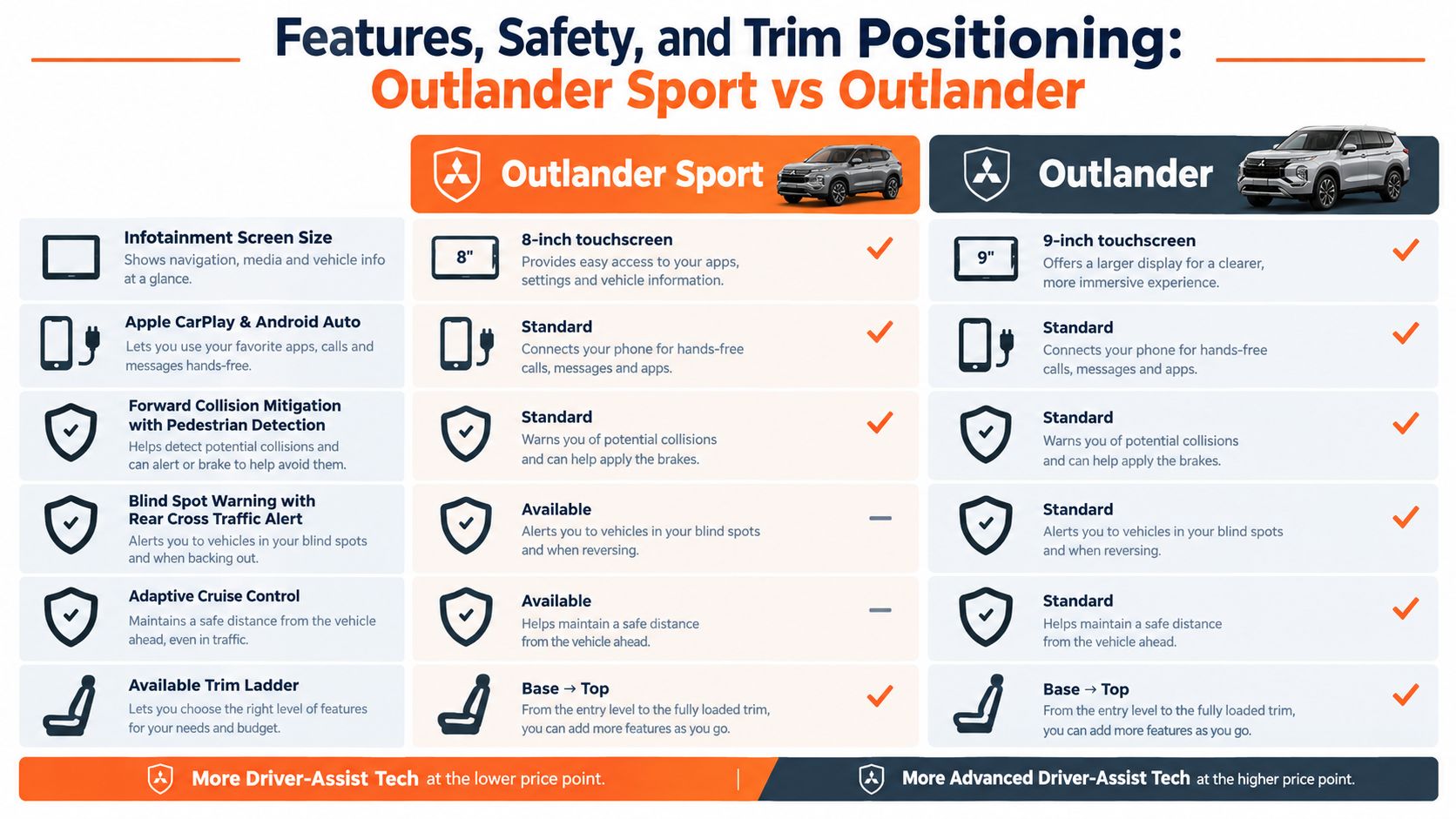
The equipment gap deserves a closer look because the extra money for the Outlander doesn’t only buy additional seats. The Outlander Sport offers practical connectivity and driver-assistance equipment in its lineup, while the Outlander’s newer design supports a broader package of modern cabin and safety technology. Exact availability depends on model year and trim, so compare window stickers rather than relying on a model name alone.
Technology that affects daily use
Apple CarPlay and Android Auto can make navigation, music, calls, and messages easier to manage during a commute. Connect your phone before buying. Check how quickly the system responds, whether the display is easy to read, and whether the controls feel natural while the vehicle is moving.
Safety features deserve the same hands-on treatment. Depending on the configuration, Mitsubishi equipment can include Forward Collision Mitigation, pedestrian detection, Blind Spot Warning, Rear Cross Traffic Alert, lane-departure assistance, and adaptive cruise control. Don’t assume that a feature available on one trim is standard on another.
The Outlander’s newer platform gives it a stronger argument for shoppers who want modern active-safety coverage and a more current infotainment experience. The Sport may still provide the functions many commuters need, but its older foundation limits how closely it can match the larger SUV’s technology strategy.
Match the trim to the driver
A commuter who drives alone most of the time may prefer the Outlander Sport with the features that matter most, such as smartphone integration, parking convenience, and available driver alerts. There’s little reason to pay for unused seating capacity.
A small family should compare the vehicles with car seats installed. A larger family should start with the Outlander because the third row and extra cargo space solve problems the Sport can’t solve through trim upgrades. Downsizers should consider whether grandchildren, guests, or holiday cargo will make the extra capacity useful.
The cheapest trim isn’t automatically the best value. Compare safety equipment, comfort features, connectivity, and seating before focusing on the payment. The right question is whether the vehicle will still meet your routine after the novelty wears off.
Pricing, Value, and the Cost of Going Cheaper
The Outlander Sport starts at $24,995, while the Outlander starts at $29,995, a $5,000 difference, according to recent Mitsubishi SUV pricing comparison data. That gap can change a monthly budget, but it does not settle the decision by itself.
The Sport’s lower price gets you a smaller, two-row SUV. The Outlander costs more because it provides extra seating, greater power, more passenger room, and more maximum cargo space. A Long Island commuter who drives alone may save money with the Sport. A household carrying children, passengers, sports gear, or bulky purchases should price the Outlander before choosing the cheaper vehicle.
The older-platform trade-off
Independent coverage describes the Outlander Sport as an older design updated repeatedly since its 2011 debut, while the newer Outlander is positioned around broader efficiency and electrification choices. Those differences are outlined in coverage of the Outlander and Outlander Sport price and product split.
The lower Sport price remains legitimate value for a driver who needs two rows and a compact footprint. It becomes harder to justify when the vehicle must serve a growing family or carry changing loads. The older platform and two-row layout cannot be corrected by selecting a higher trim. If your needs outgrow the cabin, an early replacement can erase the original savings.
Price the whole purchase
Compare the complete transaction, not only the advertised starting figure:
- Trade value: Get a realistic appraisal for your current vehicle.
- Financing or leasing: Review the monthly payment and total obligation.
- Equipment: Price the Sport trim that includes the features you want.
- Ownership horizon: Decide whether the SUV will fit your household several years from now.
- Capability: Determine whether the Outlander’s extra space and power could prevent a future upgrade.
The Sport is the clear entry-price choice. The Outlander is the stronger value when you regularly use its seating, cargo room, and power. Price the exact trim you would keep, then match it to your commute, passengers, and cargo. A lower payment matters less when the SUV cannot handle the household job.
Which Mitsubishi SUV Fits Your Life Best
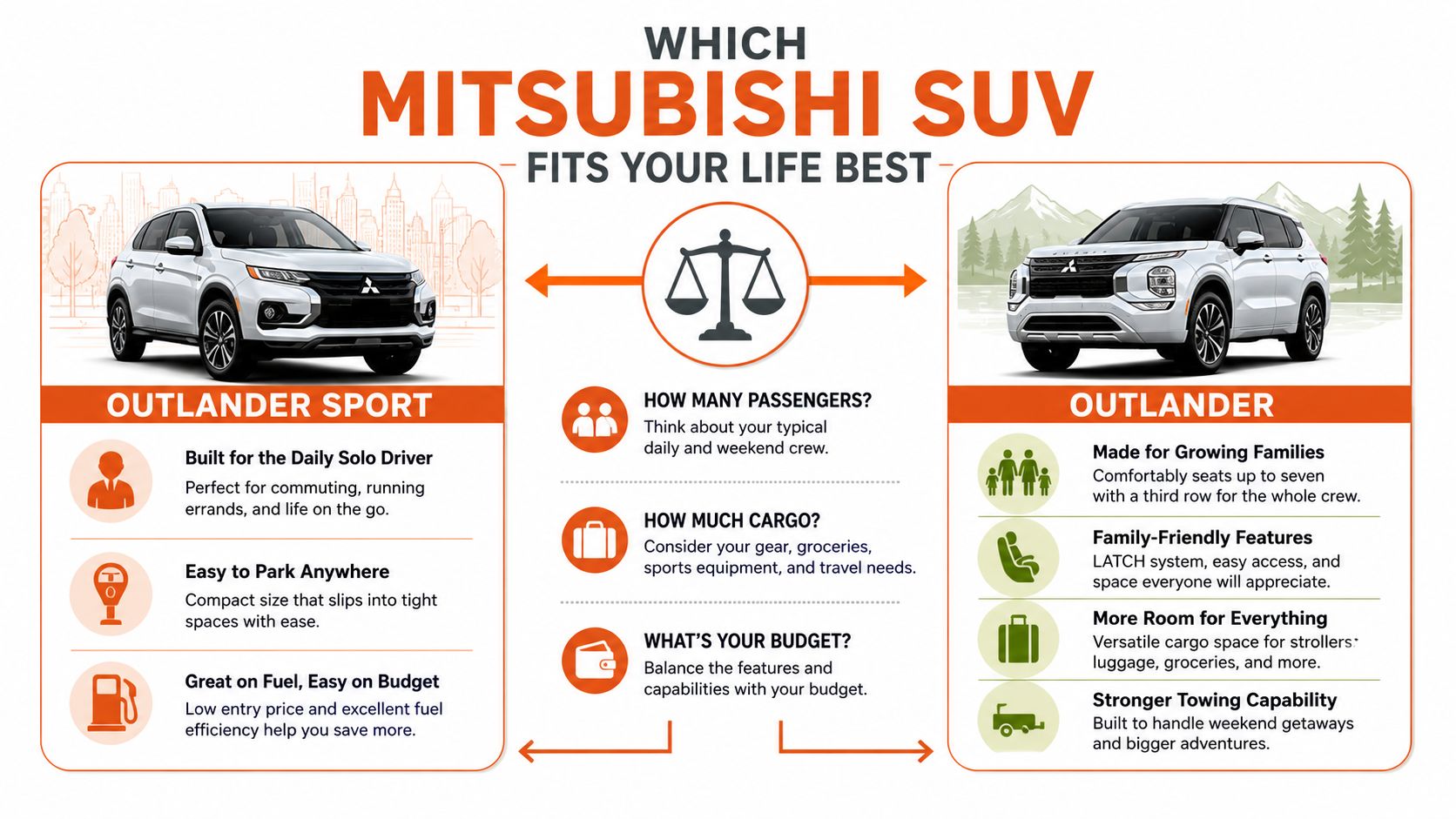
Your usual week should decide the SUV. Start with passengers, parking, and cargo, then consider the price.
Choose the Outlander Sport for a single professional, a couple, or a small household that usually carries one passenger or no passengers. It also works well as a second household vehicle for errands and commuting. Its shorter body is easier to place in tight parking spaces, and its lower starting price suits a budget that only needs two rows. That lower price comes with an older platform, so it makes sense only if your space needs are unlikely to grow.
Choose the Outlander if you regularly carry three or more people, bulky equipment, or changing loads. Small and growing families will get more use from its larger cabin and stronger engine. It also fits empty nesters who often transport grandchildren and shoppers already considering three-row crossovers. Passengers, car seats, strollers, sports gear, and luggage quickly make the extra room practical rather than optional.
The Outlander is the better long-term choice when you expect to keep the SUV for many years. The Sport’s lower price can be real value for a compact, two-row role, but the older platform and limited seating make it a poor fit for households that may need more room later. A cheaper purchase loses appeal if it forces an early replacement.
Bring your family, car seats, stroller, sports gear, or normal luggage to a back-to-back test drive. At South Shore Mitsubishi, shoppers can compare new and pre-owned inventory, review financing or leasing, value a trade-in, and arrange factory-certified service. Visit South Shore Mitsubishi in Freeport to drive both SUVs, check their seating and cargo space, and choose the one that fits your Long Island routine.
0 comment(s) so far on Outlander Sport vs Outlander: A Mitsubishi SUV Comparison